A Declaration to Humanity
The first entrance into Original Order
Copyright © 2026 Refilwe Modibedi.
All rights reserved. No part of this publication may be reproduced, distributed or transmitted in any form or by any means, including photocopying, recording or other electronic or mechanical methods, without the prior written permission of the author, except in the case of brief quotations embodied in critical reviews and certain other non-commercial uses permitted by copyright law.
Unless otherwise indicated, Scripture quotations are taken from the King James Version (KJV).
The Unformed Human is the first entrance into Original Order.
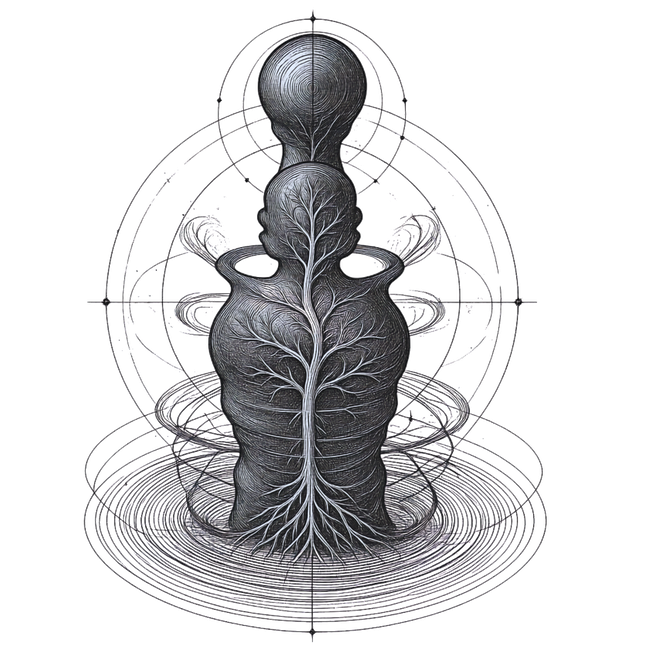
All illustrations by Refilwe Modibedi.
First digital edition, 2026. Published for free direct distribution; no ISBN has been assigned. Available to download at refilwemodibedi.online.
For permissions, licensing or rights enquiries, contact enquiries@pramanagroup.co.
Dedication
To Jesus Christ,
the Author and Finisher.
I.
THE POTTER’S ORDER
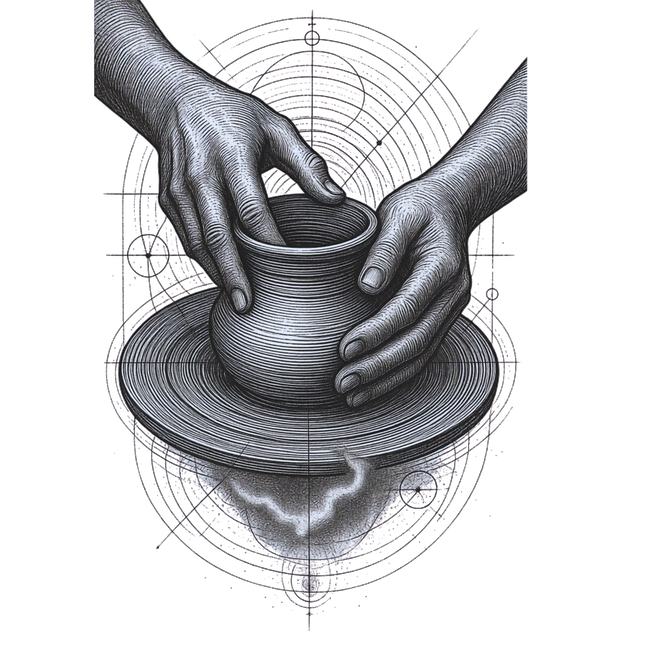
Before the first human being was given anything, he was formed.
The oldest account of our origin is exact about this order. Scripture records that “the LORD God formed man of the dust of the ground, and breathed into his nostrils the breath of life, and the man became a living soul.” The verb translated formed is the potter’s verb. Elsewhere in the Bible it describes a craftsman at his wheel, pressing and turning the clay towards a purpose the clay cannot yet see, and the prophets remembered it when they prayed, “we are the clay, and thou our potter.” A vessel’s shape is an argument about what it will one day hold. The Potter works the walls thin here and thick there, tests the balance, corrects what leans, because He already knows what will be poured in. The forming was never mere preparation for the purpose. The forming was the purpose already at work, building into the vessel the very capacity it would one day need to hold what was poured into it.
Only after this forming does the account speak of a garden to work, creatures to name, a boundary to honour and a companion to love. The man was made, placed, instructed and commanded before he was enthroned. Dominion was real, and it came last. It arrived after formation, and it arrived as a trust.
Even the first chapter of Genesis preserves the sequence inside a single sentence: “Let us make man in our image, after our likeness: and let them have dominion.” The image stands first and the dominion follows from it. Ruling was never the definition of the human being. Ruling was the consequence of resemblance, and heaven’s order has run in one direction ever since: being before having, becoming before ruling, formation before dominion.
That sequence is more than the trappings of an ancient story. It is a law, and we are living through what happens when a civilisation breaks it.
II.
THE REVERSAL
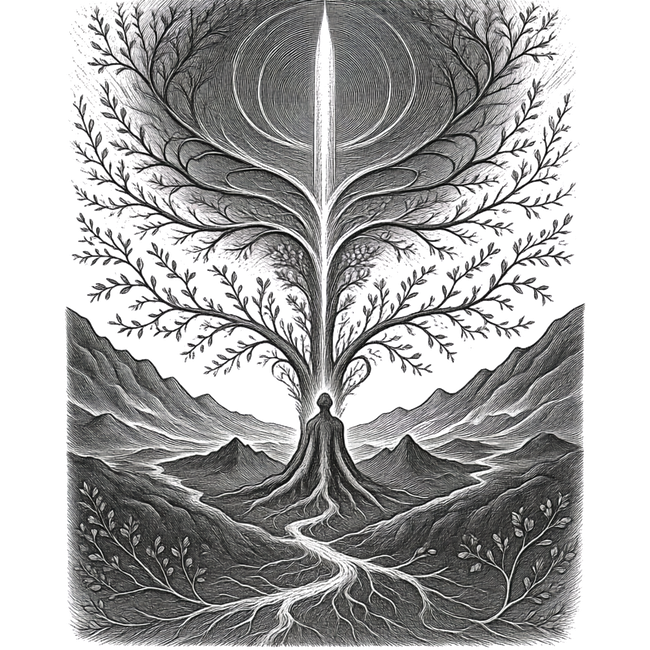
We have reversed the order of creation. We now place the world in human hands first and ask what the hands are attached to afterwards, if we ask at all. A child carries in her pocket the images, arguments, appetites and strangers of the whole earth, and we call it a phone. A young man can move his money across continents before he has governed his impulses across a weekend. A woman can be seen by a million people before she has spent one honest hour in secret, unseen and unrehearsed. A founder can automate ten thousand decisions before he has examined the single desire directing them. An ordinary person now commands reach that emperors never held, and almost no one asks what was built within the person before the reach was granted.
There is a parable in which a younger son comes to his father and says, “give me the portion of goods that falleth to me.” Notice what he does not ask. He does not ask to become anything. He asks only to receive, and the inheritance is granted, and it is real, and within days it is travelling with him into a far country where nothing in him is senior to his appetites. Scripture never says the wealth destroyed him. It says he wasted it, which is a different charge; the failure was not in what he was given but in what he had never become. We will return to this son, because his story does not end among the pigs. For now it is enough to recognise that our whole age has learned to pray his prayer. Give me the portion. Give me the platform, the capital, the audience, the access, the crown. Give me what falls to me, and let becoming wait.
I am naming the condition this produces. I call it the unformed human, and I do not mean the ignorant, the poor or the overlooked. The unformed human may be educated, wealthy, beautiful, devout and widely admired. Unformedness has nothing to do with the absence of gifts. It is the state of a person whose ability to affect the world has grown beyond their ability to govern what is operating within them. The faculties are all present; they have simply never been brought into order. The mind is quick, and it cannot remain with one question for an hour. The voice is confident, and it has never learned the government of silence. Desire is strong, and it has never met a refusal it respected. Power is available, and nothing inside the person is senior to it.
For a century we were told that our problems were problems of lack. Humanity lacked information, so we would educate. It lacked access, so we would connect. It lacked freedom, so we would remove restraint. We kept those promises on a scale no previous age imagined, and the results now sit before us, asking to be read honestly. We multiplied schooling and produced graduates who cannot follow a single argument from its first line to its last without reaching for a screen. We multiplied communication and watched conversation thin into performance. We multiplied liberty and discovered appetites that rule more absolutely than any king our history ever deposed. We multiplied intelligence itself, housed it in machines, set it loose upon the earth, and began quietly surrendering the faculties that formation once built within us: memory, judgement, patience, the long labour of imagination.
The multiplication was real. The diagnosis was wrong. Humanity’s deepest deficit was never information.
We have forgotten how to become.
The defining imbalance of this age does not run between nations, classes or generations. It runs through the centre of the individual person. The hand can now reach farther than the character beneath it. The voice travels farther than the truth within it. The appetite can acquire more than the soul has learned to govern. Understand clearly what this means: power has no need to corrupt this person in the old, dramatic sense. Power simply arrives and finds no government in residence. Money gives appetite spending power. Visibility gives insecurity an audience. Technology gives intention speed. Authority gives character consequence. Nothing in the receiving changes the receiver. More does not transform a person; more reveals a person, and then multiplies whatever it finds.
Every year the reach extends, and the question our age refuses to ask grows heavier in the silence.
Who is holding all of this?
III.
THE HANDS THAT WRITE US
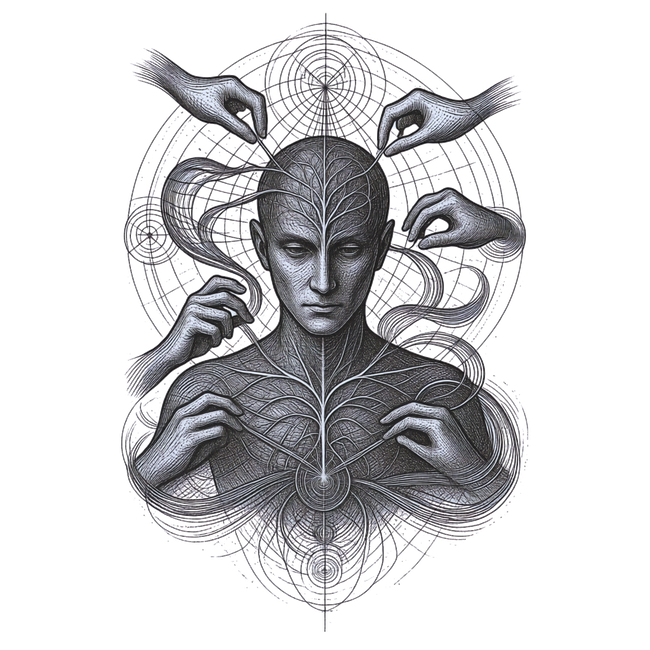
It would be easier if the unformed human were simply neglected, a page left blank. The truth is stranger. No human being remains unformed, because formation never waits for permission. Every life is being shaped by something, in every season, through every ordinary hour. The only real question is what has been given the authority to do the shaping.
Consider how expert the world has become at entering the person. Somewhere, something has recorded what makes you stop scrolling, what makes you compare, which image returns you to the screen at midnight, which fear you cannot leave unanswered and which longing you will pay to have named. What is being assembled here is not observation but profiling, a portrait of you built from your own unguarded patterns, without your face ever being consulted. None of that knowledge was gathered out of curiosity. It is gathered because whoever understands what you cannot resist has found the handle by which you can be moved, and there are industries built upon the handle.
Meanwhile almost no one has taught the person how to govern access to themselves. We have doors everywhere and gatekeepers nowhere. Every opinion enters. Every comparison enters. Every manufactured urgency enters, arriving with the confidence of something entitled to your inner life, until the soul is crowded with tenants it never chose and cannot remember admitting.
People are not blank pages. They are manuscripts written by unexamined hands. Family wrote its lines early, in a script the child could not yet read. Fear wrote in the margins. The market wrote whole chapters and signed them with your name. Religion sometimes wrote where God had not spoken. Rejection wrote. The wound wrote. The audience wrote. The algorithm is still writing, patient and untiring, adding a sentence every time attention lingers. Because the writing accumulated gradually, the person reads the finished text and calls it identity. They will defend handwriting they have never examined as though it were their own soul, and their grief, if they ever discover the truth, is understandable, because somewhere beneath the accumulated text there is a self that has hardly been consulted.
This is how formation proceeds when no one governs it. What enters repeatedly begins to look normal. What looks normal begins to shape desire. Desire directs choice, repeated choice hardens into habit, habit builds character, and character determines what a person can carry. The chain runs quietly from an unguarded gate to an unfit throne, and every link is forged in ordinary hours that nobody thought were important.
Attention, then, was never a mere productivity resource. Attention is an instrument of formation. What receives your sustained attention acquires influence over you, and what receives your worshipful attention will eventually demand your obedience. The struggle over human attention is not a struggle over minutes. It is a struggle over authorship.
You are being written. The question is who holds the pen.
IV.
THE THRONES
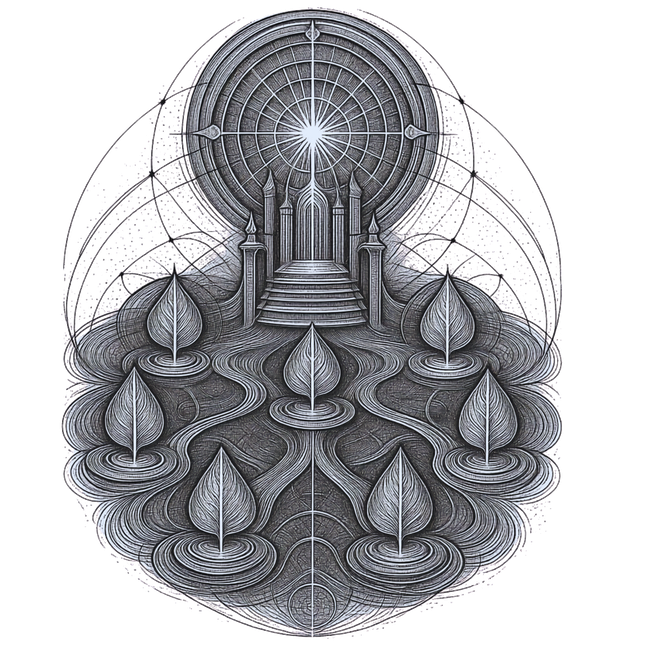
We were taught to understand freedom as the removal of restraint. To be free, we learned, is to do what one wants, say what one wants, purchase what one wants and become whatever one desires. The teaching contains a hidden assumption: that once the visible masters are removed, the person has no master. Jesus dismantled that assumption in one sentence, spoken to people who were certain they had never been in bondage to anyone: “whosoever committeth sin is the servant of sin.” Removing a visible master proves nothing of the kind. It may only mean that the new master rules from inside the person rather than from outside them, and so needs no chains, no army and no throne that can be stormed.
Anything you cannot refuse has authority over you. An appetite that must be satisfied has a throne. An approval that must be won has a throne. A fear that cannot be faced has a throne, and it legislates from the shadows, deciding which rooms you avoid, which truths you soften and which silences you keep. An ambition that overrules integrity whenever the two collide is not a dream; it is a government, and it has been passing laws in your name for years.
Examine your own week. Not your beliefs about yourself; your week. Find the thing you reached for every time discomfort arrived. Find the device that cannot lie face-down through a meal, the purchase that answers sadness, the person whose approval you consult before you permit yourself a sentence, the subject you have arranged your whole life to avoid thinking about. You may call these preferences. Refuse one of them for seven days and observe what rises up to negotiate.
Preferences do not negotiate. Rulers do.
True freedom was never the absence of government. It is the presence of rightful government. The formed person can act and refrain, speak and stay silent, possess without worshipping possession, desire without taking orders from desire, hold power without spending it merely because it is available. Every one of those sentences describes a strength, and strength must be built. Permission cannot produce it. A society can grant every liberty on paper and still raise people who are ruled absolutely, because it enlarged their choices while neglecting the chooser.
This has now become our common practice. We hand children entire worlds before they can distinguish what deserves entrance. We give leaders authority before anyone has tested their restraint, and capital to founders before anyone has asked about their stewardship. We demand liberty loudly and formation not at all, and when appetite produces disorder, we rename the disorder self-expression and defend it as progress.
The person who cannot say no has already said yes. They were simply not present when the allegiance was sworn.
V.
THE MIRROR
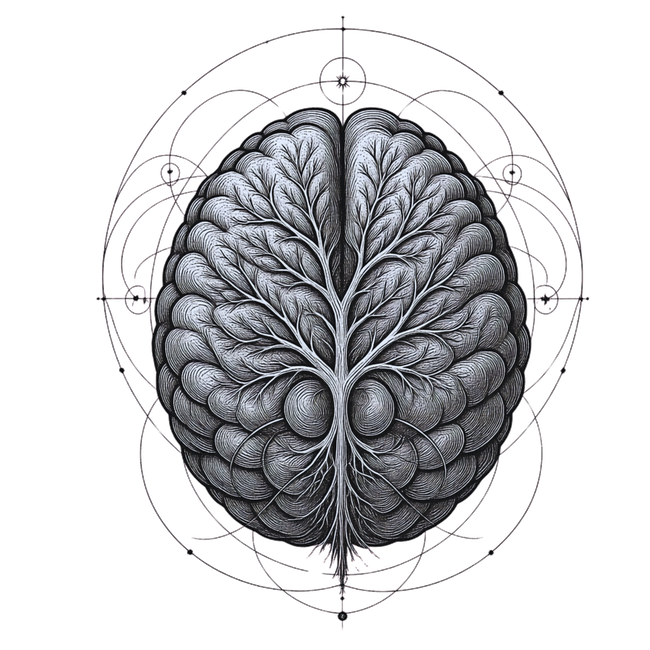
Until recently, these were questions a person could postpone. The powers now entering human hands have ended the postponement.
We have built machines that produce language without thought, images without events, answers without comprehension, company without presence and endless output without any formation at all. None of this makes the machine evil. It makes the person beneath the machine decisive. A machine gives speed to intention; it does not purify intention. A system gives reach to desire; it does not ask whether the desire is worthy.
The tool multiplies whatever it is handed, and it is handed whatever we are.
The urgent question, then, is not only what artificial intelligence will become. It is what human beings may cease becoming while it grows. Human capacities are built by resistance. Memory grows where remembering is required, judgement where decisions carry weight, imagination where nothing arrives ready-made. Each of these can now be outsourced before it has ever been formed. A student can submit a hundred essays without once carrying a thought from blank page to conclusion. A leader can generate a decision without descending into the problem. A lonely person can be accompanied indefinitely by something that will never require the labour of love. Assistance itself is no enemy. Assistance becomes atrophy the moment it removes the resistance through which a capacity was meant to grow, and an age that automates its own formation will meet its powers unformed.
Here is what I believe about these machines. They will become one of the most honest mirrors ever held before humanity. They will not show us what machines can do; every generation of engineers will show us that. They will show us what human beings valued enough to keep doing for themselves. Whatever we surrender without understanding its worth, the mirror will record. Whatever we neglect to become, the mirror will expose, at scale, with our own reflection staring back.
Every tool is built from a belief about what a human being is for. So is every school, every market, every platform and every law. Beneath the crisis of formation sits the oldest question we have stopped asking.
VI.
THE REMEMBRANCE
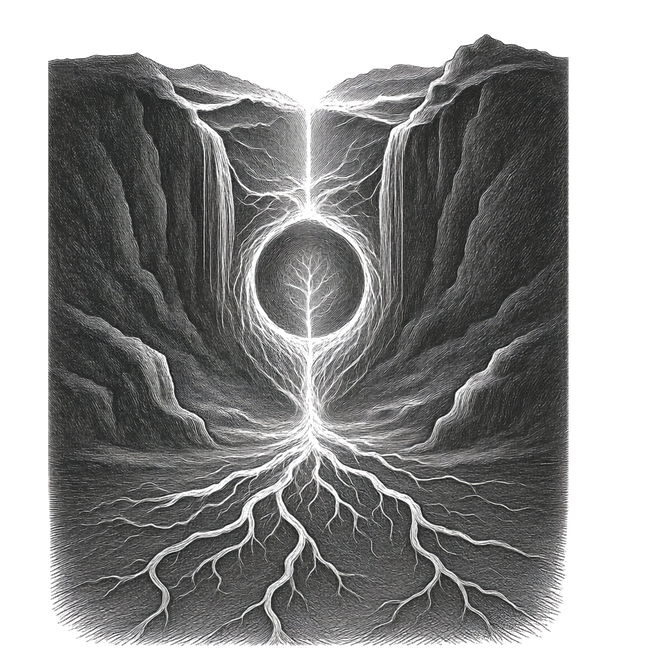
What is a human being?
Every system answers, including the ones that claim neutrality, and the answer is hidden in what the system rewards. A market rewards consumption and thereby declares the person a consumer. A platform rewards visibility and declares the person a performer. An institution rewards compliance and declares the person a unit of measurement. None of these powers publishes its doctrine of humanity. The doctrine is read in the kind of person each one repeatedly produces. Show me whom your system celebrates, and I will show you what it worships.
The human being, however, was not invented by any system, because the human being is not self-originating. The first human act was reception. We did not command our first breath. We did not draft the laws that hold existence together. We entered a reality we did not author, carrying a life we did not manufacture. To be created is not to be diminished. To be created is to be located: to learn that power has a Source, life has an Author, freedom has a purpose and possession has a responsibility.
There is one scene in Scripture where human beings are called gods, and it is worth standing inside it, because it is not the scene people imagine. Psalm eighty-two opens in a courtroom. “God standeth in the congregation of the mighty; he judgeth among the gods.” The ones addressed by that startling title are holders of delegated authority, judges and rulers over others, and the court has not gathered to celebrate them. “How long will ye judge unjustly, and accept the persons of the wicked?” They were charged to defend the poor and the fatherless, and they have not done it. Then comes the sentence that Jesus himself would one day quote in the temple: “I have said, Ye are gods; and all of you are children of the most High. But ye shall die like men, and fall like one of the princes.”
Read it slowly, because it holds the whole doctrine of this declaration. The title was real. The delegation was real. Beings made in the image of God, entrusted with judgement over others, stood high enough to be called gods, and they fell for one reason only: they did not govern rightly what had been placed in their hands. The single passage that crowns humanity is a judgement upon failed government. Likeness was never equality. Delegation was never ownership. The height of the calling is the exact measure of the accountability, and when Jesus took this psalm upon his lips, he used it while claiming what no delegate could ever claim, which is precisely the point. There is One who is not a steward. Everyone else is.
Set beside that courtroom a night in Gibeon. God appears to a young king and says, “ask what I shall give thee.” Solomon, newly holding power over a people too many to be numbered, asks for one thing: “give therefore thy servant an understanding heart to judge thy people, that I may discern between good and bad.” In the Hebrew it is a hearing heart. He asked for government before he asked for anything that power could purchase, and the request pleased God so deeply that riches and honour were added without being sought. The order was the offering. Capacity was requested; access was appended. Even so, the later chapters of Solomon’s life stand as their own warning, because formation is not a certificate issued once. It is a government that must keep its throne.
This is what I mean by Original Order, and it is the world this declaration opens. Original Order is not nostalgia. The past holds wisdom and corruption in the same hands, and no century deserves worship. The movement of this work is not backwards but beneath: beneath the inherited definition, beneath the institution, beneath the method, beneath every system that has continued operating long after forgetting what it was established to serve. What is education for, before education becomes examination? What is wealth for, before wealth becomes proof of worth? What is beauty for, before beauty becomes spectatorship? What is technology for, before technology begins deciding what humanity is permitted to remain? What is a human being for, before every system names the person according to what it can extract? Original Order asks the prior question, recovers first function and only then builds. Back to origin. Beneath distortion. Through truth. Forward into new creation.
Within that order, formation recovers its true meaning. Formation is not self-improvement, nor the optimisation of the self so that a disordered world can extract more efficient performance from it. Formation is the intentional ordering of a human being beneath God. It is the long work through which truth stops being a quotation and becomes a structure the person lives inside; through which knowledge, tested under responsibility, turns into discernment; through which discipline, practised past the point of feeling, turns into freedom; through which power, held under something higher than desire, turns into stewardship. Formation is what remains when inspiration leaves. It is what says no when appetite has prepared its argument, what finishes the work after the vision has lost its excitement, what remembers who you are when praise and rejection speak with equal volume. It is slow, because it is building capacity rather than an image. An image can be produced in an afternoon. Capacity is only ever revealed under weight.
The scale of this work is deceptive. Formation looks like a private matter, one soul alone with its disciplines, and that is the illusion, because nothing that happens inside a person stays inside them. It is carried outward in a look, a habit, a silence, a raised voice, to everyone that person goes on to form in turn, and it compounds down every generation it touches. A home is a small civilisation, and a civilisation is a large home. The mother who teaches a child to wait has amended the constitution of a future household. The father who governs his own speech has legislated for generations he will never meet. The questions asked at one table, the appetites refused in one kitchen, the truth honoured in one ordinary argument: these are founding acts, because the world is never formed anywhere except inside people, and people are formed almost entirely in rooms that history never sees.
This is why hidden seasons are not wasted seasons. The room reveals what was formed before the invitation. The crown reveals what existed before the coronation. What is built where no one is looking decides what can be carried where everyone is.
VII.
THE SUMMONS
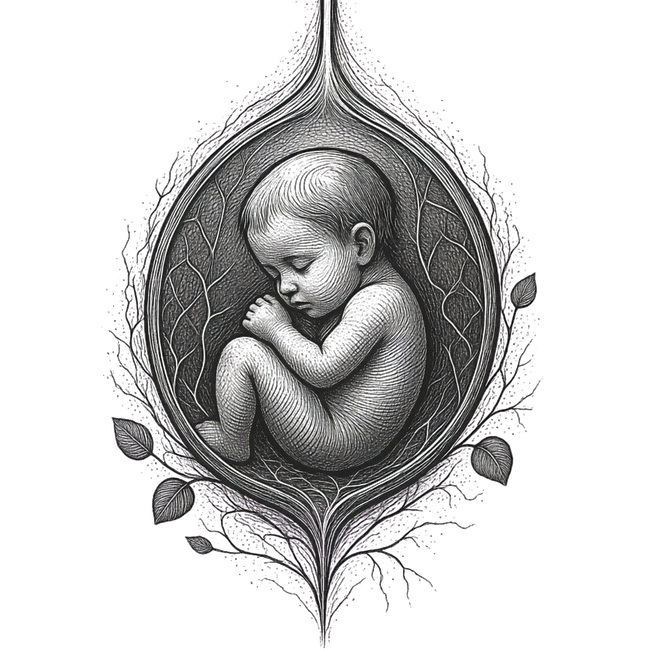
I do not write this from above the human condition. There is no above. I write as a woman under formation, a child of God still being worked at the wheel, and every law in this declaration stands over my own life before it stands over the age. Nothing here excuses its author.
The future will test all of us against these laws, and it will not wait for our agreement. Humanity will build more; that is settled. We will reach farther; that is settled too. The unsettled question, the only one that now matters, is what kind of human being will stand inside all that power. A declaration may speak of humanity, and humanity is a crowd in which everyone can hide.
This one therefore ends with you.
What has formed you? Name the hands honestly. What governs you when the doors are closed and no audience requires the performance? What has been given the pen, and what is sitting on the throne? If the portion you keep praying for actually fell to you tomorrow, what would it reveal?
Remember the son in the far country. The famine found him among the pigs, everything wasted, every appetite finally bankrupt, and the text records something quietly astonishing: he came to himself. Beneath the spent inheritance and the borrowed hungers there was still a self to come to, and a road home, and a father who saw him while he was yet a great way off. No one in this age is too written-upon for return. The manuscript is not finished. A prophet was once sent down to a potter’s house to learn this in front of the wheel: “the vessel that he made of clay was marred in the hand of the potter: so he made it again another vessel, as seemed good to the potter to make it.” Marred is not the end of the story. The clay that will yield can be made again.
This, then, is the order to be restored, in a life, in a home, in an institution, in a civilisation.
Formation before dominion.
Government before power.
Capacity before access.
Order before multiplication.
God before all.
The human being must be formed again, and the forming begins, as it has always begun, with one person consenting to the wheel.
The Potter has not left it.
What must you become, in order to carry what has already been placed in your hands?
ACKNOWLEDGEMENTS
Before any human acknowledgement, all glory belongs to Jesus Christ.
Nothing I am, nothing I have understood, nothing I have built, and nothing I may yet become originates independently in me. Whatever intelligence, ability, vision, strength or understanding may be seen in my life is first evidence of the mercy and workmanship of God. I have come to know this not as doctrine alone, but through the long education of a life.
There were years in which I thought talent belonged to me, that strength was mine, that intelligence was something I possessed. The LORD has been faithful enough to dismantle that illusion. I know now, with a certainty deeper than language, that I am human, that I am flesh, and that apart from Him I can do nothing. Whatever is true, living and worthy in me has its Source in God. This work is therefore not offered as evidence of the greatness of its author. It is evidence of the faithfulness of the One who forms.
Motsamai Modibedi
I acknowledge my father, Motsamai Modibedi, with profound honour. My father raised me, and he continues to father me still.
From my earliest years, he led me in the LORD. He taught me to pray. He taught me to read the Word of God. He taught me that the flesh must not govern the response of a child of God; that when circumstances provoke fear, anger, pain or retaliation, I am to remain standing in the LORD. Again and again throughout my life, his instruction has been the same: do not act from the flesh. Stand in God.
He taught me that the LORD is faithful because he lived as though the LORD were faithful. His instruction was never merely spoken. I have watched it embodied in patience, grace, compassion, restraint, understanding and a slowness to anger that has marked his life for as long as I have known him. What he taught me concerning the character of God, he laboured to demonstrate in his own character.
There has never been a season of my life in which I have been too old to call my father. At one in the morning, three in the morning, five in the morning — through battles, questions, decisions, failures, victories and seasons I could not understand — he has answered. And when words were insufficient, he prayed. Many moments in my life have been carried by prayers I did not have the strength or understanding to pray for myself.
There is also a spiritual inheritance that my father carried before me and faithfully entrusted to me. What God formed in him did not terminate with him. Through teaching, prayer, example and deliberate spiritual fathering, he handed to me an inheritance in Christ that I now carry with reverence and responsibility. I would not be the woman I am today, nor the woman I am still becoming, without the privilege of having been raised beneath his fatherhood and discipled beneath his life in God.
If there is in me a consciousness that seeks God before action, Scripture before opinion, prayer before panic and obedience before impulse, much of its earliest human architecture was laid by my father. For this, I honour him.
Carel Motshekga
I also acknowledge my mentor, Carel Motshekga. There came another season of my formation when I was learning to navigate business, ambition, development, structure and the life of God at the same time.
In that season, Carel gave me an instruction that would alter the course of my life. He told me to read the Bible from Genesis to Revelation.
He taught me that my reasoning could not be divided — Biblical in one area and governed by another system elsewhere — but that the Word of God had to become the foundation from which I understood my life.
And at a decisive moment, when the world around me could easily have advised me to secure the business, protect the opportunity, pursue the work and make room for God somewhere alongside it, his instruction was different:
Choose Christ.
Turn from the world and choose Christ.
I obeyed that instruction before I understood what it would cost. What followed did not immediately resemble reward. There were seasons of loss, confusion, stripping, suffering and preparation in which the decision seemed almost impossible to reconcile with what I was experiencing.
Only later did I begin to understand what God had been doing. The LORD was teaching me that nothing I could build would ever be greater than the One from whom the ability to build had come. He was teaching me that talent is not God, intelligence is not God, business is not God, opportunity is not God, and neither vision nor human ability can sustain a life that has departed from its Source. He was teaching me Himself.
Carel's instruction became one of the doors through which that formation entered my life. Across the years, there have also been moments when a single conversation with him — sometimes only an hour, sometimes only a few minutes — arrived at precisely the point at which direction was required. His willingness to answer, counsel, correct and point me again toward Christ has, at important intersections, helped redirect the road before me. I acknowledge the significance of those moments.
A mentor cannot walk another person's road for them, but there are people God places along a road who recognise the turning before the traveller does. Their obedience in speaking, and their willingness to be available at the appointed moment, can protect years of destiny.
Carel has been such a person in my life. For his insistence that I choose Christ; for directing me continually toward Scripture; for reminding me that Jesus Christ is the Way, the Truth and the Life; and for making himself available at moments when direction mattered, I honour him. And yet every acknowledgement returns finally to where this work began.
To Jesus Christ.
I do not understand Him as an idea, a religious category or a distant theological concept. I know Him as LORD. I seek Him as a Person. I desire to know Him more deeply than I have known anything in this world. Whatever remains of my life, I desire that it belong to Him. Whatever I build, may He govern it. Whatever I teach, may He correct it. Whatever I carry, may He have formed me sufficiently to carry. Whatever influence enters my hands, may it remain beneath His government. And wherever anything I produce carries light, truth, intelligence, beauty or power, let no one mistake its Source.
It is the LORD.
From this declaration forward, my answer is participation. I avail myself to the forming. All glory, all honour and all worship belong to Jesus Christ.
He alone is God.
THE AUTHOR

Refilwe Modibedi writes and builds around one question: what must a human being become in order to carry what has already been placed in human hands? The question takes two forms in her life. On the page, she is the author of a body of work called Original Order, which opens with the declaration The Unformed Human. In the world, she is the founder of Pramana Group, the institution through which her thinking is converted into strategies, systems, ventures and enterprises. The writing and the building obey the same law: nothing should be multiplied before it has been rightly formed.
Her subject is the imbalance she regards as the defining condition of this age. Power now reaches human hands faster than character is formed beneath it: the hand reaches farther than the person holding it has been built to govern, and every year the reach extends. Working from that diagnosis, she moves beneath the surfaces of the territories where human life is actually made and unmade, among them education, enterprise, wealth, technology, family, beauty, leadership and government, and in each of them asks the prior question. What is education for, before it becomes examination? What is wealth for, before it becomes proof of worth? What must exist within a person before the crown, the capital or the platform arrives? The territories differ; the architecture beneath them does not.
The foundation of her life and work is her allegiance to Jesus Christ and to the order of God revealed from Genesis to Revelation. She holds that allegiance apart from the religious systems that have organised themselves around His name; her identity is received from God rather than conferred by an industry, an institution or a category. From that position she studies the world’s systems deliberately and without anxiety: markets, capital, technology, artificial intelligence, media, education, the structures of power. She learns their languages in order to work within them, to name what has become malformed in them, and to build at a higher order than they have taught the world to expect. The work carries its spiritual foundation openly, and it is written so that anyone can enter it: the executive, the sceptic, the investor, the parent, the artist, the reader wounded by religion, the person who simply suspects that the systems that named them cannot say who they are.
Pramana Group, founded in South Africa and built for work far beyond it, exists because she refuses the border between thought and structure. Truth that remains language has not finished its journey; it must become an operating model, an enterprise, an institution, an inheritance. Through Pramana she is developing ventures and environments of formation designed to hold their value across generations, and everything produced under her name answers to one measure, which she calls the standard of heaven. The phrase describes discipline rather than luxury: order, intelligence, beauty, proportion, function and completion, held together the way creation holds detail and design in a single living ecosystem. It governs her sentences as strictly as her institutions.
The Unformed Human is the first entrance into this world. It names the condition of a person whose ability to affect the world has outgrown their ability to govern what operates within them, and it traces what follows when a civilisation hands out inheritance before maturity, freedom before discipline and power before formation. It diagnoses, and then it summons. The reader who continues past this page enters a body of work moving in one direction: formation before dominion, government before power, capacity before access, order before multiplication, God before all.
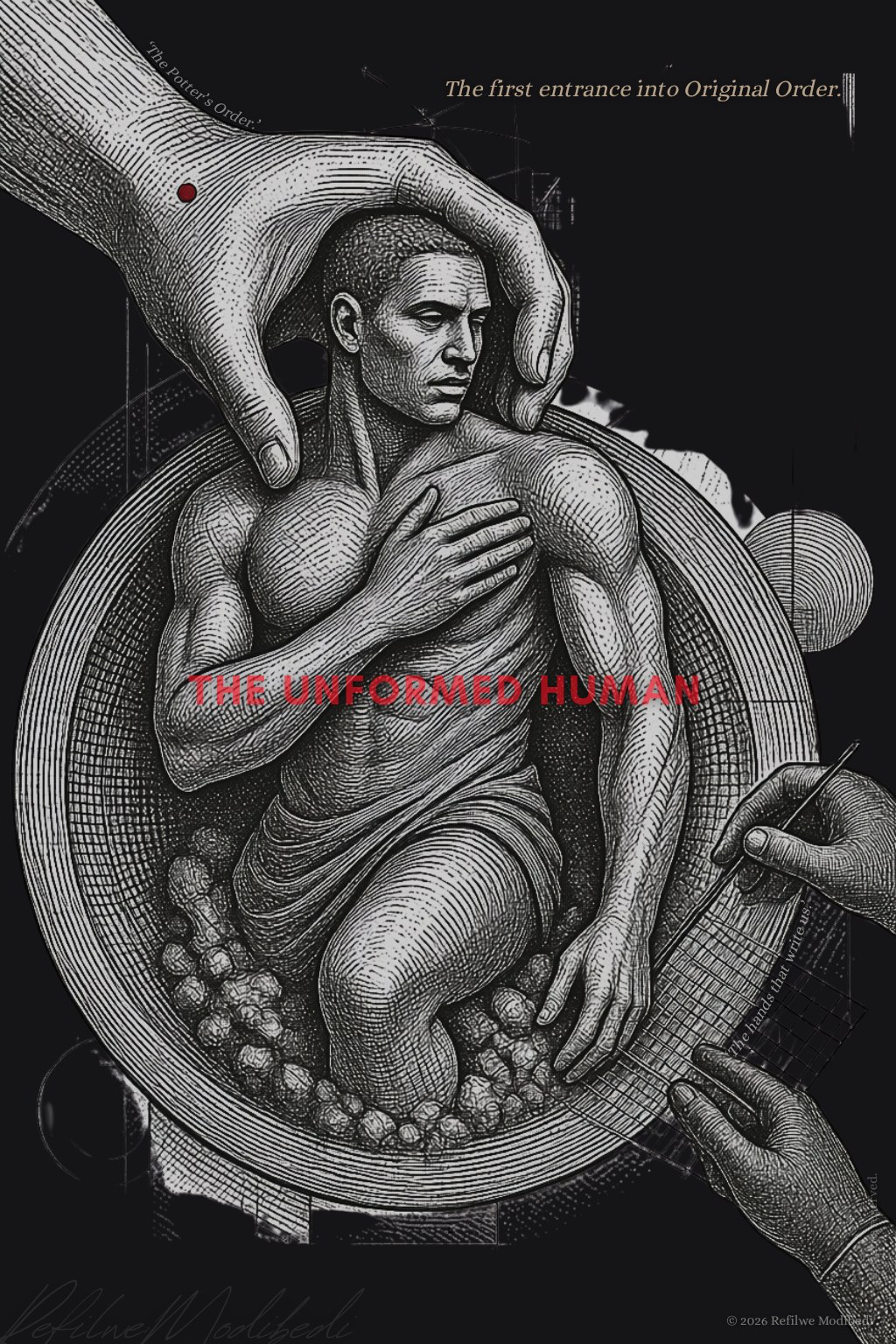
Formation before dominion. Government before power.
Capacity before access. Order before multiplication. God before all.
You have read the first entrance. Original Order continues in the volumes that follow, each one moving further into the territories this declaration only named. What has been opened here is not concluded here.
Further reading in Original Order
REFILWE MODIBEDI
Author · Founder · Builder · Teacher
refilwemodibedi.online
Write to Refilwe Modibedi
refilwe@refilwemodibedi.online
Teaching & Speaking
speaking@refilwemodibedi.online
Patronage & Support of the Work
refilwemodibedi.online/patronage
patronage@refilwemodibedi.online

Secure payments via Paystack
PRAMANA GROUP
Strategic Intelligence · Systems · Venture Creation
pramanagroup.co
Corporate & Institutional Engagements
Work with Refilwe through Pramana Group